Overview
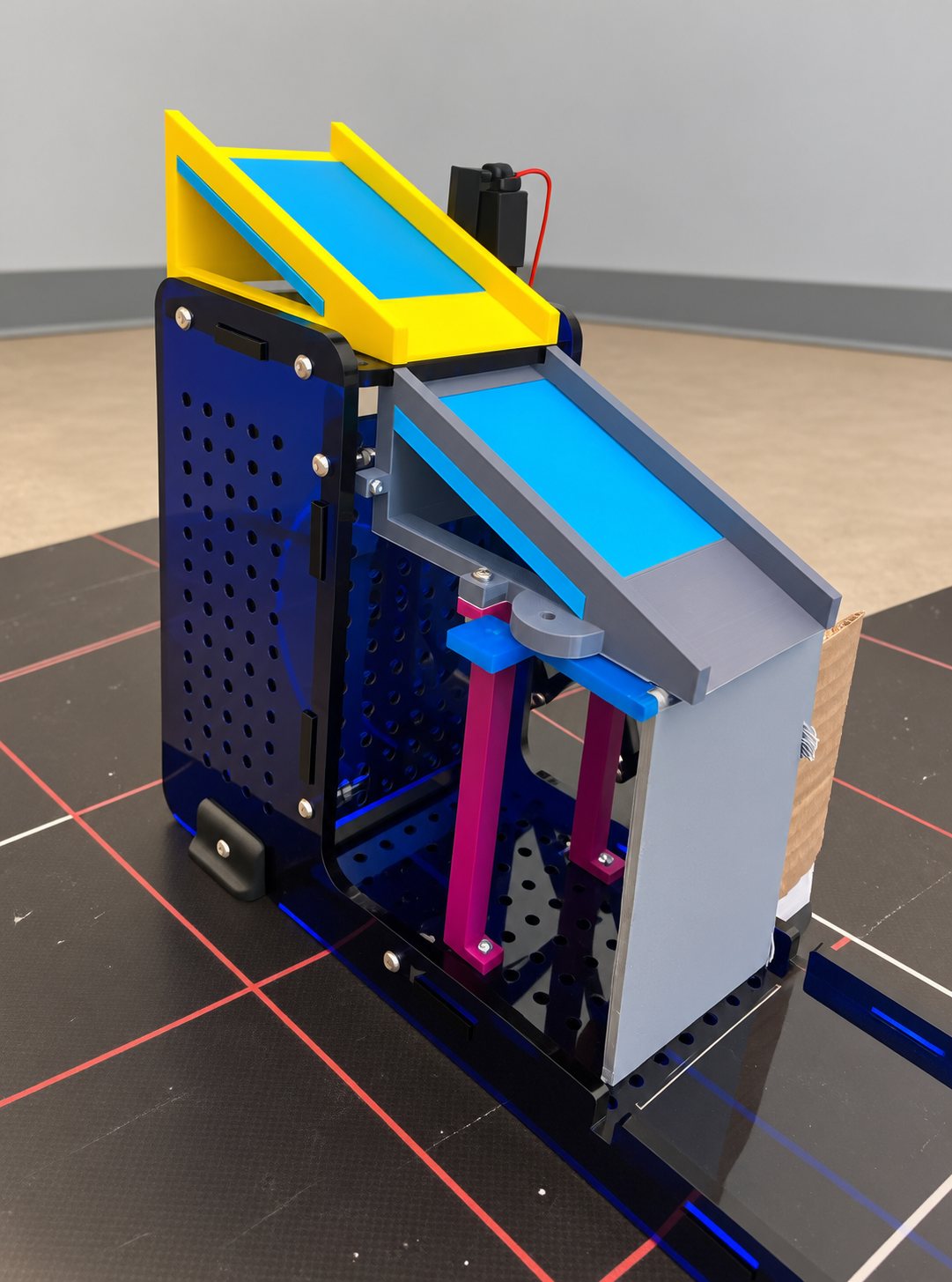
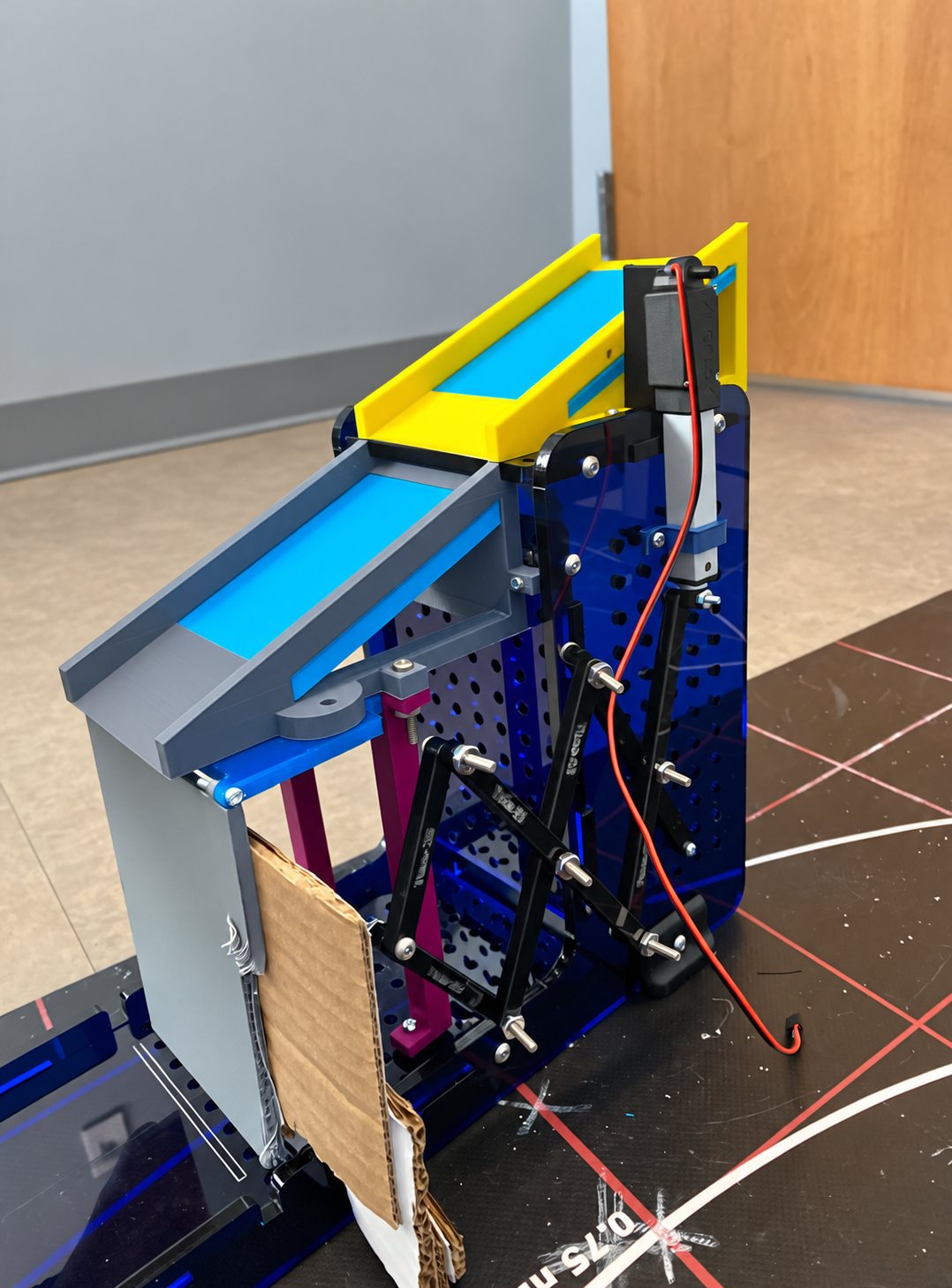
This project addressed a real-world challenge in airport luggage handling: efficiently transferring luggage between two platforms of varying height. The solution was a linear-actuator-driven bridge designed to improve operational efficiency and safety. The system combined mechanical design, prototyping, and custom software for autonomous control.
Problem Statement
Luggage handling between platforms of different heights presents challenges for both efficiency and worker safety. Manual transfer is labor-intensive and can lead to injuries. The goal was to design a mechanized solution that could reliably move luggage between platforms while adapting to height variation.
Design & Development
Initial concepts were developed and refined before transitioning to detailed mechanical design in Autodesk Inventor. The linear actuator mechanism was selected for its ability to provide controlled vertical motion and bridge the gap between platforms. The design evolved through iterations to balance strength, weight, and manufacturability.
A high-fidelity 3D printed prototype was fabricated using PrusaSlicer and Prusa printers. The prototype underwent continuous testing to identify design improvements. Refinements were made to the mechanism, tolerances, and structural elements based on test results.
Software Integration
Custom Python code was implemented to control consecutive Q-Arm and linear actuator motion autonomously. The software coordinated the sequence of movements required to pick up luggage from one platform, transfer it across the bridge, and deposit it on the second platform. Timing, sequencing, and error handling were key aspects of the implementation.
Key Outcomes
- Functional prototype demonstrating automated luggage transfer
- Design adaptable to varying platform heights
- End-to-end development from concept to tested prototype
- Integration of mechanical systems with custom control software
Tools Used
Python, Autodesk Inventor, PrusaSlicer, 3D Printing, Prototyping & Testing