Overview
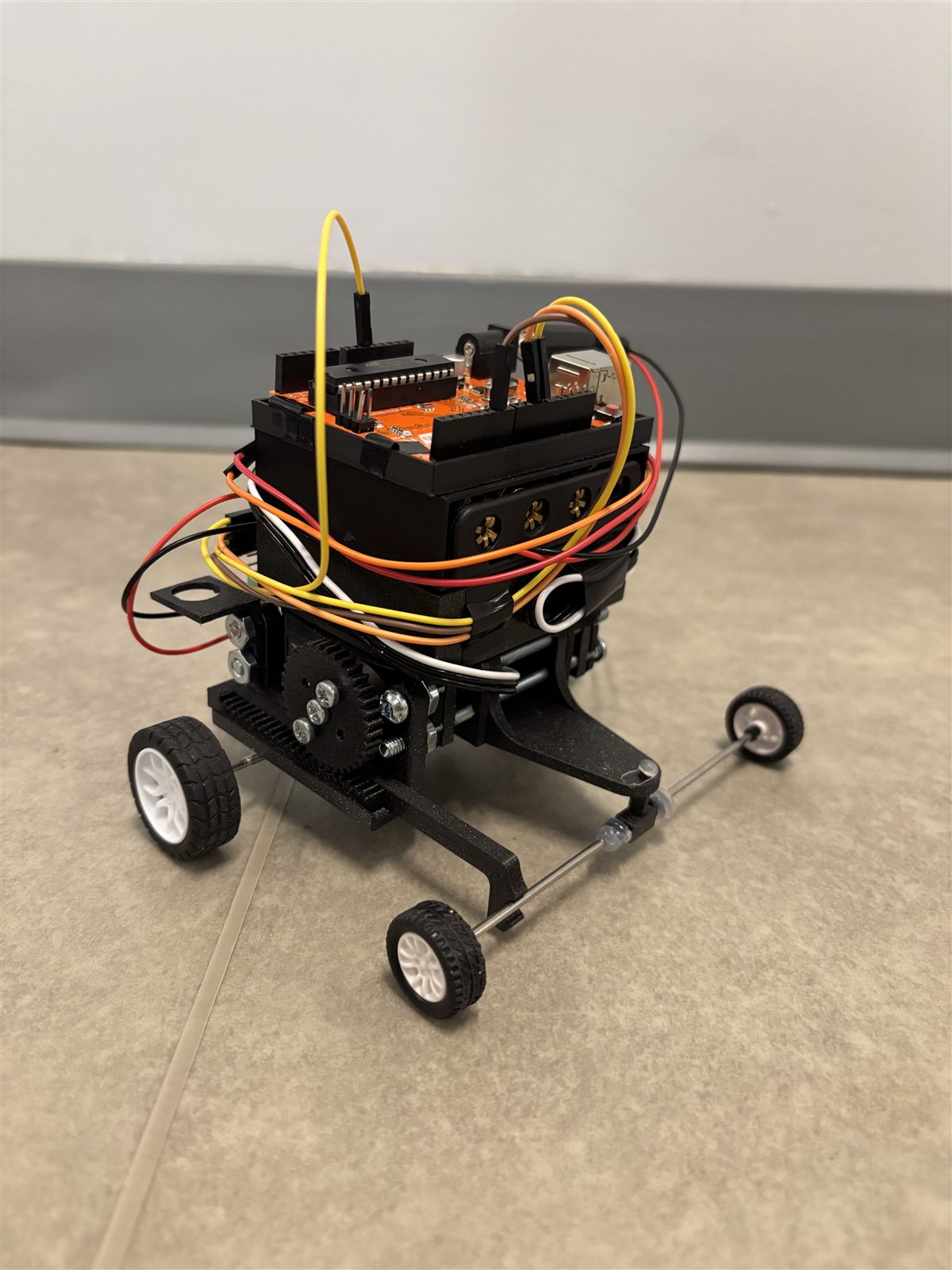
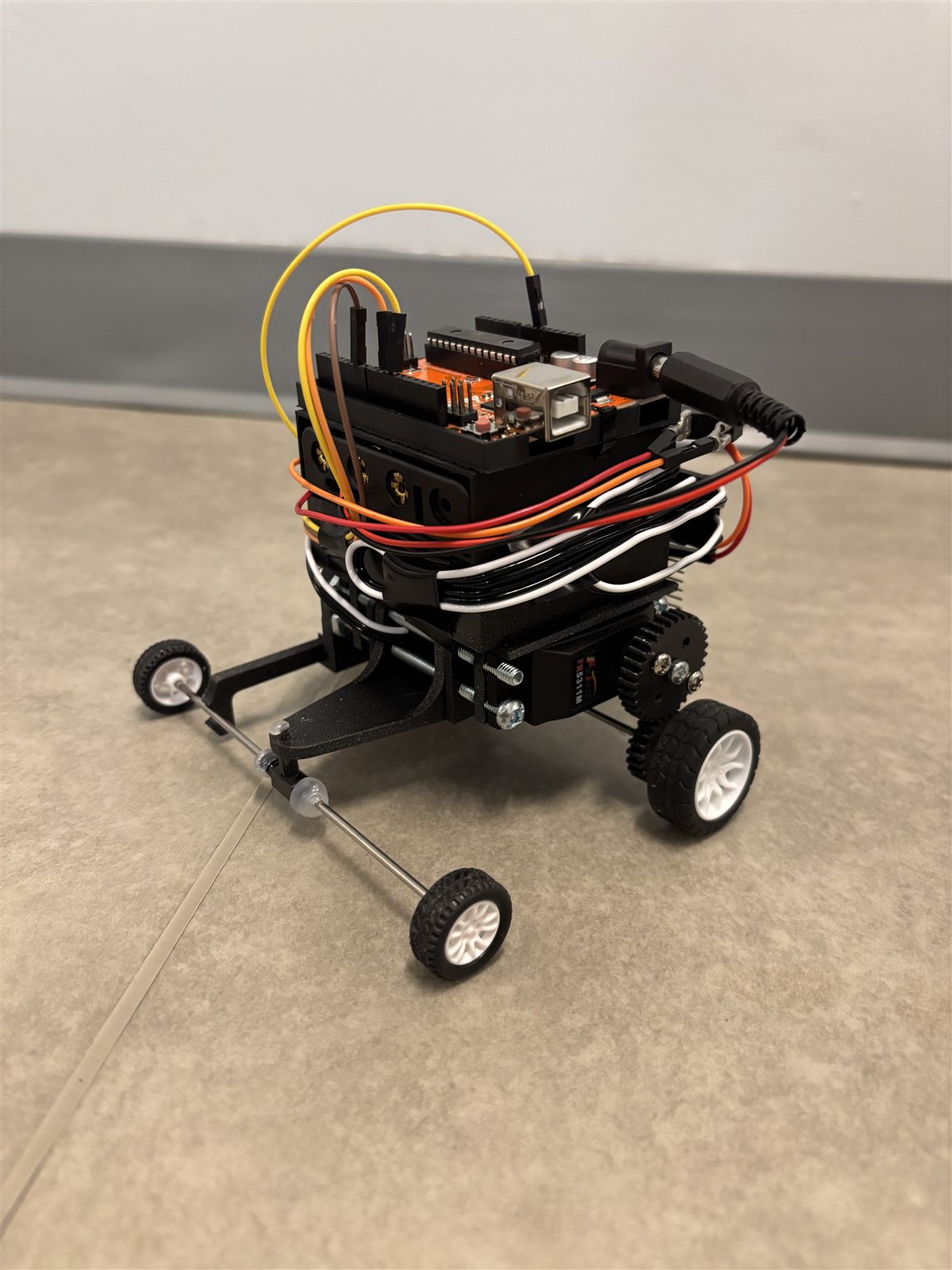
This project involved developing an automated robot constrained to less than 10×10 cm that could draw the largest, most high-precision circular path possible. The challenge combined mechanical design, fabrication, and embedded programming to create a compact, precise system capable of autonomous motion.
Objectives
- Design a robot within strict size constraints (10×10 cm footprint)
- Maximize the radius of the circular path drawn
- Achieve high precision in the drawn path
- Apply creative mechanical design to minimize overall size
Design Process
The design began with concept sketches exploring different mechanisms for generating circular motion. Key considerations included: drive mechanism selection, motor placement, pen/marker positioning, and structural rigidity. Pre-made geometries and standardized components were leveraged where possible to reduce overall size and simplify fabrication.
Prototype and final assemblies were fully modeled in Autodesk Inventor, including proper fits, clearances, and tolerance specifications. The design iteration process prioritized compactness while maintaining functionality and manufacturability.
Fabrication
All components were fabricated using Prusa 3D printers and PrusaSlicer for print preparation. Careful attention was paid to applying proper tolerances to ensure accurate fits between mating parts. Print orientation and support structures were optimized to achieve the required dimensional accuracy and mechanical strength.
Software & Control
Custom Arduino code was written to control the motors and perform autonomous motion. The software was debugged and optimized to achieve smooth, consistent circular motion. Motor timing, step sequencing, and path generation were all implemented from scratch to meet the precision requirements.
Key Outcomes
- Successfully delivered a compact robot meeting size constraints
- Applied creative mechanical design to maximize performance within constraints
- Full design-to-fabrication workflow from CAD to physical prototype
- Integrated mechanical, electrical, and software disciplines
Tools Used
Autodesk Inventor, PrusaSlicer, Prusa 3D Printers, Arduino IDE